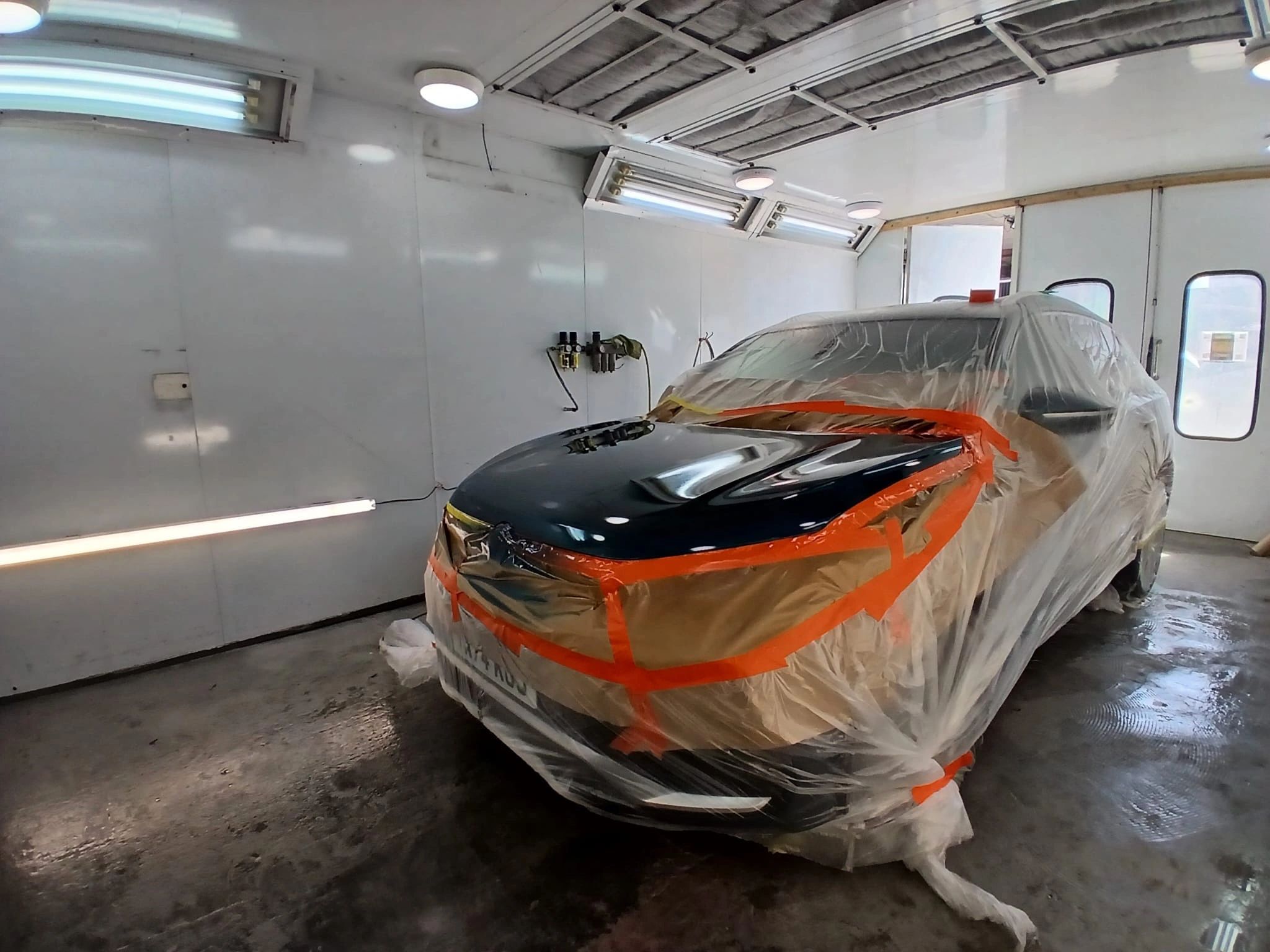
The honest answer is that it depends on how much of the car you are painting. A single scuffed bumper or a kerbed alloy is a same-day job. A full respray, every panel, doors, roof, sills, is a job measured in days, not hours. The work is the same set of steps either way. What changes is how many panels you repeat them on, and how long the paint needs to cure before the car goes back together. This guide walks through each stage, how long it takes, and what slows a job down.
The stages of a respray, and how long each takes
Every paint job, whether it is one panel or the whole car, goes through the same run of steps. Skipping any of them is how you end up with a repair that looks fine for a month and then flakes.
- Assessment. Before anything else, we look over the car, work out the depth of the damage, check the paint code and decide whether a panel needs filler or just paint. Ten minutes on a single scuff, longer on a full car where every panel has to be graded.
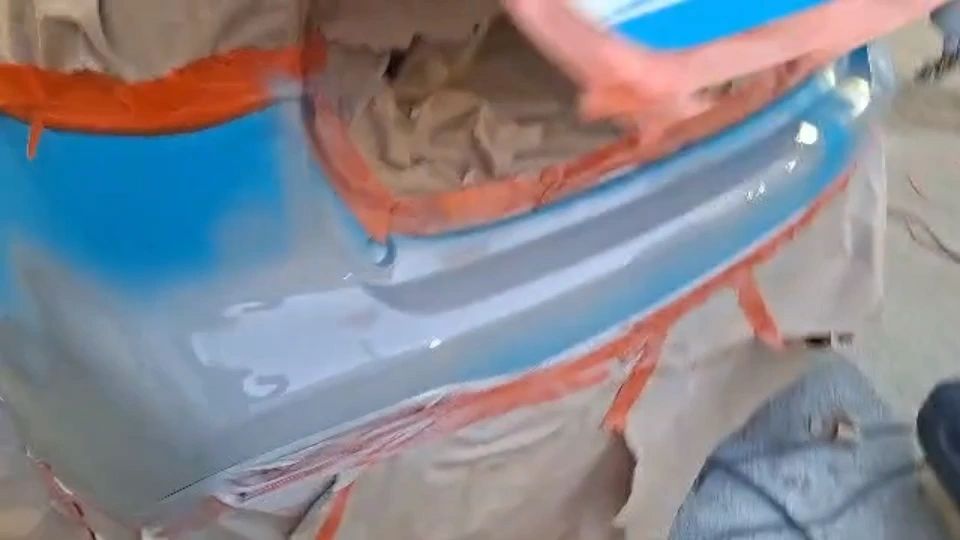
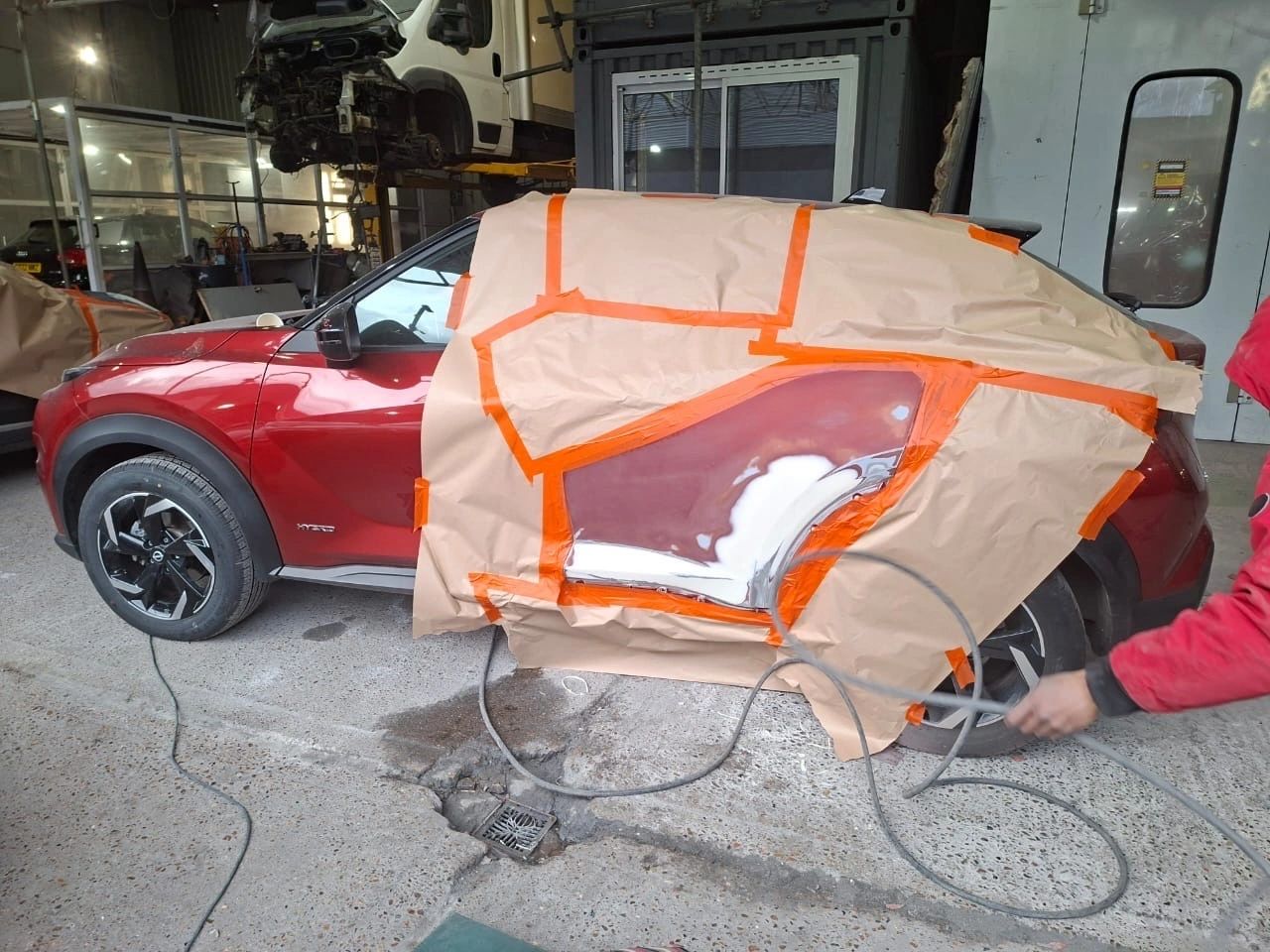
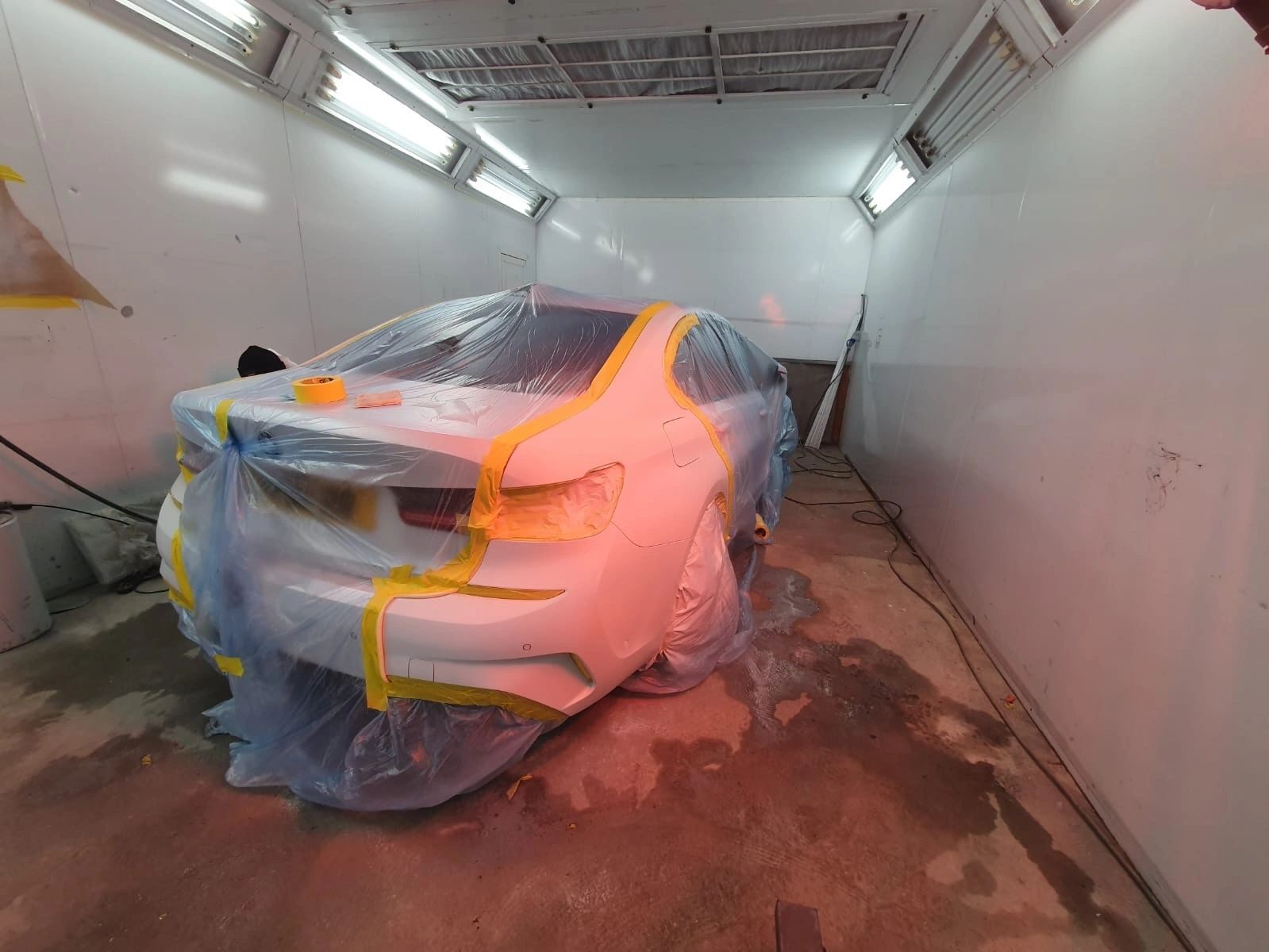
- Prep and masking. This is the part people underestimate. The panel is cleaned, sanded back to a key so the new paint grips, and any old flaking paint is taken off. Then everything you are not painting, glass, trim, rubbers, lights, gets masked up. Prep is most of the work on any paint job. Rushing it is the single most common reason a repair fails.
- Paint. Primer first where there is bare metal or filler, then the colour coat goes on in two or three passes with flash-off time between each. A single panel is quick. A full car is a slow, methodical loop around the whole shell.
- Lacquer. The clear coat goes over the colour to seal it and give the shine. This is what you actually see and touch, so it has to go on clean.
- Flash and cure. Paint is not dry the moment it stops being wet. It needs to flash off between coats, then cure properly before it can be handled, polished or reassembled. In a heated booth this is sped up, but it is still real time that cannot be skipped. Cure time is usually the longest single block in the whole job.
- Reassembly. Trim, badges, lights and anything taken off the car goes back on. Quick on a single panel, fiddly on a full respray where a lot has come off.
- Polish and finish. Once cured, the panel is buffed to bring up the shine and blend the edges so the repair disappears into the surrounding paint.
Why a single panel goes back same day but a full respray takes days
A single scuff or a bumper scrape only goes through those stages once, on one area. Prep is contained, the spray is quick, and there is one panel's worth of cure time before it can be polished and handed back. Drop the car off early and there is plenty of room in a day to do it properly. Most of our single-panel scratch and bumper jobs go back the same day. We cover the pricing side of that in our guide on how much it costs to fix a car scratch.
A full respray is a different animal. You are prepping and masking the entire shell, often with parts taken off, then spraying every panel, then waiting on cure time across the whole car before anything goes back together. Even working flat out, that is typically three to five working days, sometimes more on an older car that needs rust or dent work first. If you want the full cost picture, our car respray cost guide breaks it down.
Same-day works on small, contained jobs. A whole-car respray is days, because you cannot rush cure time and you cannot rush prep.
What slows a respray down
A few things turn a quick job into a longer one. None of them are the garage being slow, they are the car needing more work before paint can go on.
- Rust. If corrosion has set in, it has to be cut back to clean metal before any paint, and if it has gone far enough that becomes a repair job in its own right. We go into this in our guide on stone chips and rust. Leaving rust under fresh paint just means it comes back through.
- Dents needing filler. A creased or dented panel has to be pulled or filled and flatted smooth before colour goes on. Filler also needs its own drying and sanding time, which adds to the day.
- Colour matching. A flat solid colour is straightforward. Metallic and pearl paints are harder to match and have to be blended into the panels around the repair so there is no visible edge. That care takes time, and getting it wrong is worse than taking the extra hour.
- Parts off the car. Bumpers, mirror caps, handles and trim sometimes have to come off to do the job properly. Taking them off and refitting them adds time at both ends.
- Cure time. This is the one nobody can shortcut. Paint and lacquer need to cure before the car is safe to polish and drive. A heated booth helps, but the chemistry still needs the hours.
How to give yourself the best chance of a same-day turnaround
If your job is a realistic same-day candidate, a scuff, a kerbed bumper, a scratch on one or two panels, the single biggest thing you can do is drop the car off early. The earlier it is on the ramp, the more cure and polish time fits inside the day. Bring it in first thing and there is room to do it right and still hand it back the same evening.
A few other things help. Tell us the damage up front so we can have the right paint matched and ready. Be realistic about scope: if the car has damage across several panels, or rust, or needs a colour change, that is not a same-day job and no honest garage will promise it is. And if you mainly want a new look rather than a repair, a vinyl wrap is often quicker than a full respray and is removable.
When you bring a car to us in Tottenham Hale, we tell you straight whether it is a same-day job or a multi-day one before any work starts, and we quote on what it actually needs. Our same-day car paint service handles scratches, scuffs and bumper damage with proper colour matching, and we work on cars and vans of all makes for drivers across North London.
If you have a job you want looked at, call us on 020 3582 3444 or message on WhatsApp and bring it in for a free, no-obligation quote.
Good to know
Can a car respray really be done in a day?+
A single panel can, yes. A scuffed bumper, a kerbed alloy or a scratch on one or two panels usually goes back the same day if you drop the car off early. A full respray of every panel is a job of three to five working days, sometimes more, because you cannot rush prep or cure time across a whole car.
What takes the longest in a respray?+
Prep and cure time. Cleaning, sanding and masking is most of the labour on any paint job, and the paint then needs to cure before it can be polished and the car put back together. A heated booth speeds curing up but cannot skip it. The actual spraying is one of the quicker parts.
Why does my respray need more than one day?+
Usually because there is work to do before paint can go on. Rust has to be cut back to clean metal, dents have to be filled and flatted, and metallic or pearl colours take longer to match and blend. Parts coming off and going back on add time too. We tell you which of these apply once we have seen the car.
How can I give myself the best chance of a same-day turnaround?+
Drop the car off early so there is room for cure and polish time inside the day, tell us the damage up front so the paint is matched and ready, and be realistic about scope. Small contained jobs go back same day. Whole-car resprays and rust work do not.
Get a free, no-obligation quote
Bodywork and mechanical under one roof in Tottenham Hale. Open every day, 08:00 to 22:00. Call, message on WhatsApp, or request a quote.