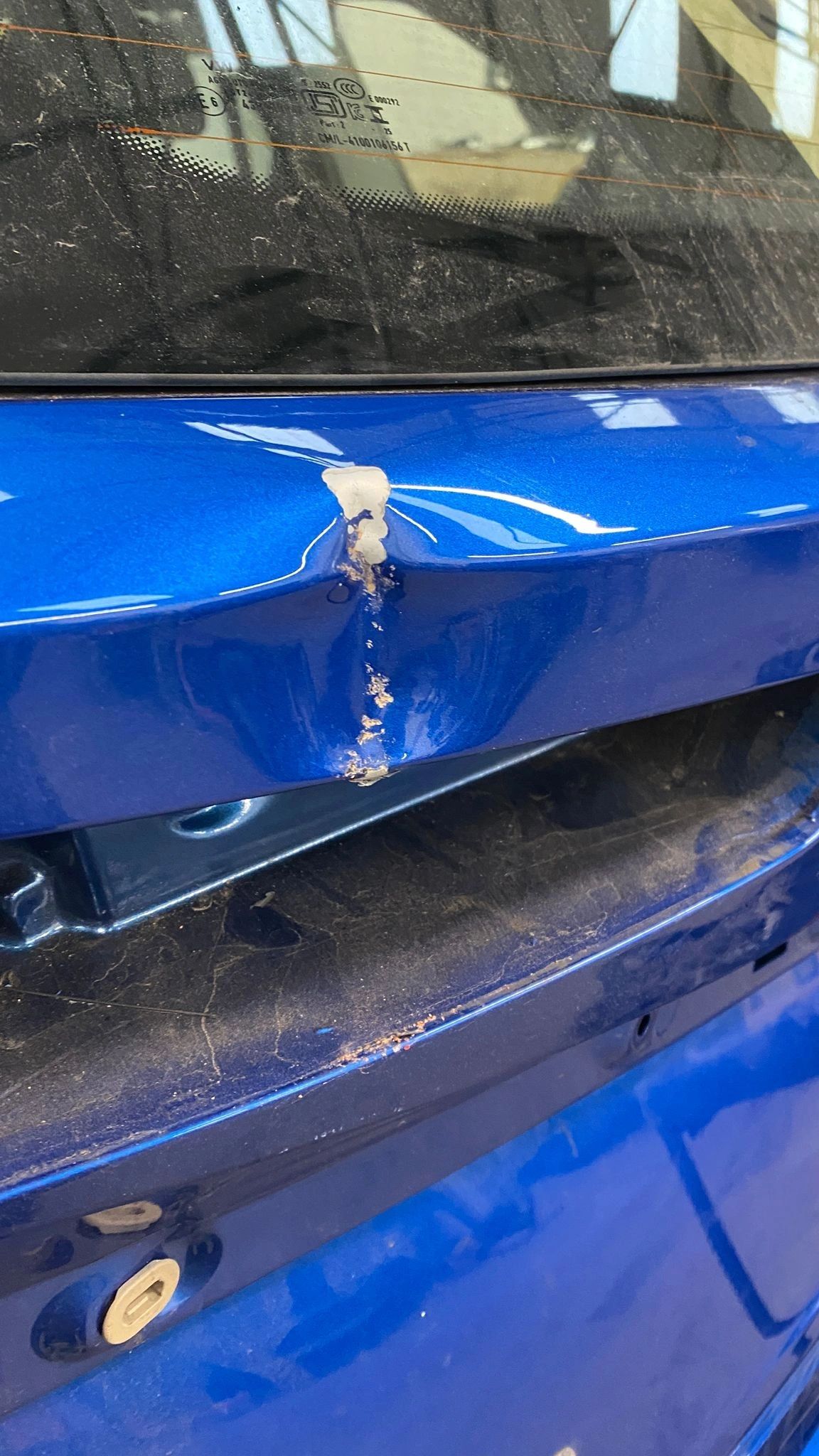
A stone flicks up off the motorway, taps the bonnet, and leaves a chip the size of a pinhead. Most people never give it a second thought. The trouble is that tiny mark is often the first step towards rust, and rust does not stay small. Left alone it works its way under the paint, spreads across the panel, and ends up at the sills and wheel arches where it becomes a structural problem. This post explains how the paint on your car actually protects the metal, what happens the moment a chip breaks through, and why a quick same-day car paint repair now is far cheaper than a welding job later.
How car paint protects the metal underneath
The paint on a modern car is not a single coat. It is built up in layers, and each one has a job to do. Understanding that stack is the easiest way to see why a chip matters.
- The steel panel. Bare body steel is the part that rusts. On its own it would corrode in weeks.
- Primer and a protective coating. The first treatments bond to the metal and form a barrier against moisture. This is the layer that keeps water away from the steel.
- The colour coat (basecoat). This is the colour you see, but on its own it is thin and not very tough.
- The clear coat (lacquer). The top layer. It is clear, takes the wear from grit, UV light and washing, and gives the panel its shine.
When all those layers are intact, water never touches the steel. The paint is a sealed skin. Damage one layer and the skin is broken.
What a stone chip or deep scratch actually does
A light scuff that only marks the clear coat is mostly cosmetic. The problem is the deeper hit. A stone chip travelling at speed, or a key dragged down a door, can punch straight through the clear coat, the colour and the primer in one go. At that point you have bare metal open to the air.
You can usually tell how deep a mark goes. If you run a fingernail across it and it catches in the groove, it has gone past the clear coat. If the centre of a chip looks darker, grey or brown rather than your car's colour, that is the metal showing through, and it has already started to react with the air.
The rule of thumb is simple. If you can see bare metal or a colour that is not your car's paint, the clock has started.
How rust starts and why it spreads
Rust is iron reacting with oxygen and water. A chip gives all three a place to meet. Rain sits in the gap, road salt over winter speeds the reaction up, and the exposed steel begins to corrode. That much most people expect.
What surprises people is where it goes next. Rust does not stay neatly inside the chip. The corrosion creeps sideways underneath the surrounding paint, lifting it away from the metal as it goes. From the outside you start to see bubbling and blistering: small raised lumps under the paint, sometimes with a rough or flaky feel. By the time the paint is bubbling, the rust under it is wider than the bubble looks. The clean-looking surface is hiding the real spread.
Gravity and water flow then carry the problem downwards and into the parts of the car that trap moisture and dirt:
- Sills, the structural rails along the bottom of the doors.
- Wheel arches, which catch spray, grit and salt all year.
- Door bottoms and the boot floor, where water collects and drainage holes block up.
These areas are double-skinned and hard to see into, so rust can eat through from the inside before you notice anything on the outside. That is the difference between a chip and a real repair.
A cheap paint repair now versus an expensive weld later
Caught early, the fix is straightforward. The damaged area is cleaned back to sound metal, treated, primed, colour-matched and lacquered so the panel is sealed again. That is bread-and-butter car paint work, and on a small area it can often be turned around in a day. We do this on cars and vans of all makes.
Leave it until the rust has eaten through the metal and the job changes completely. Corroded steel cannot be painted over, because there is nothing solid left to protect. The rotten section has to be cut out and new metal welded in before any paint goes near it. That is where our welding service comes in, and it is a longer, more involved repair than a paint touch-up. Bodywork, paint and welding all happen under one roof here, so a job that turns out to need metalwork does not have to move between garages.
The maths is hard to argue with. A small chip sealed early costs a fraction of cutting out a rusted sill and fabricating a repair. The longer bare metal stays open to the weather, the bigger the eventual bill.
The resale and MOT side of it
Rust is not only an appearance problem. It affects what your car is worth and whether it passes its MOT.
On the resale side, visible bubbling and corrosion knock money off straight away. A buyer who sees rust at the arches assumes there is more underneath, and they are usually right. A clean, sealed body holds its value.
The MOT is firmer still. Surface rust on a panel is one thing, but corrosion in a structural area, or within a set distance of an important mounting point, is an automatic failure. Sills, subframe areas and suspension mounts are all checked. A car that would have sailed through with an early paint repair can fail outright once the rust has reached the structure. If a test is coming up, it is worth sorting bodywork as part of your MOT preparation rather than finding out on the day. Our guide on how to pass your MOT first time covers the rest of the common pitfalls.
What to do if you spot a chip
You do not need to panic over every mark, but it pays to act on the deep ones.
- Check the depth. Bare metal or a darker colour in the chip means it needs sealing.
- Keep the area clean and dry where you can, especially over winter when salt is about.
- Get it looked at before it bubbles. Once the paint is lifting, the repair is bigger.
If you are not sure how serious a mark is, it is worth a quick look in person. We are based in Tottenham Hale and cover North London, and you can read more about what we do on the home page. For an idea of pricing on smaller jobs, see our post on how much it costs to fix a car scratch.
Get a free quote
If you have a chip, a deep scratch or the first signs of bubbling, bring the car in and we will tell you honestly whether it is a quick paint repair or something that needs welding. Quotes are free. Call us on 020 3582 3444 or 020 3582 3444, or message us on WhatsApp. We are open every day, 08:00 to 22:00, at 59 Garman Rd, London N17 0UN.
Good to know
How can I tell if a stone chip needs repairing?+
Run a fingernail over it. If it catches in a groove, or the centre looks grey, brown or darker than your car's colour, it has reached bare metal and should be sealed before rust starts. A chip that only marks the clear coat is mostly cosmetic, but the deep ones are worth acting on.
Can you paint over rust instead of welding?+
Only if the metal underneath is still solid. Surface marks can be cleaned back, treated and resprayed. Once rust has eaten through the steel there is nothing left to protect, so the corroded section has to be cut out and new metal welded in first. That is why catching it early is so much cheaper.
Will rust make my car fail its MOT?+
Surface rust on an ordinary panel usually will not, but corrosion in a structural area such as the sills, or close to a suspension or subframe mounting point, is an automatic failure. If a test is due, it is worth sorting bodywork as part of your MOT preparation rather than risking it on the day.
How long does a small paint repair take?+
A small chip or scratch repair can often be done in a day, which is why we are called Same Day Car Paint. We handle cars and vans of all makes, and because bodywork, paint and welding are all under one roof, a job that turns out to need metalwork does not have to move elsewhere.
Get a free, no-obligation quote
Bodywork and mechanical under one roof in Tottenham Hale. Open every day, 08:00 to 22:00. Call, message on WhatsApp, or request a quote.