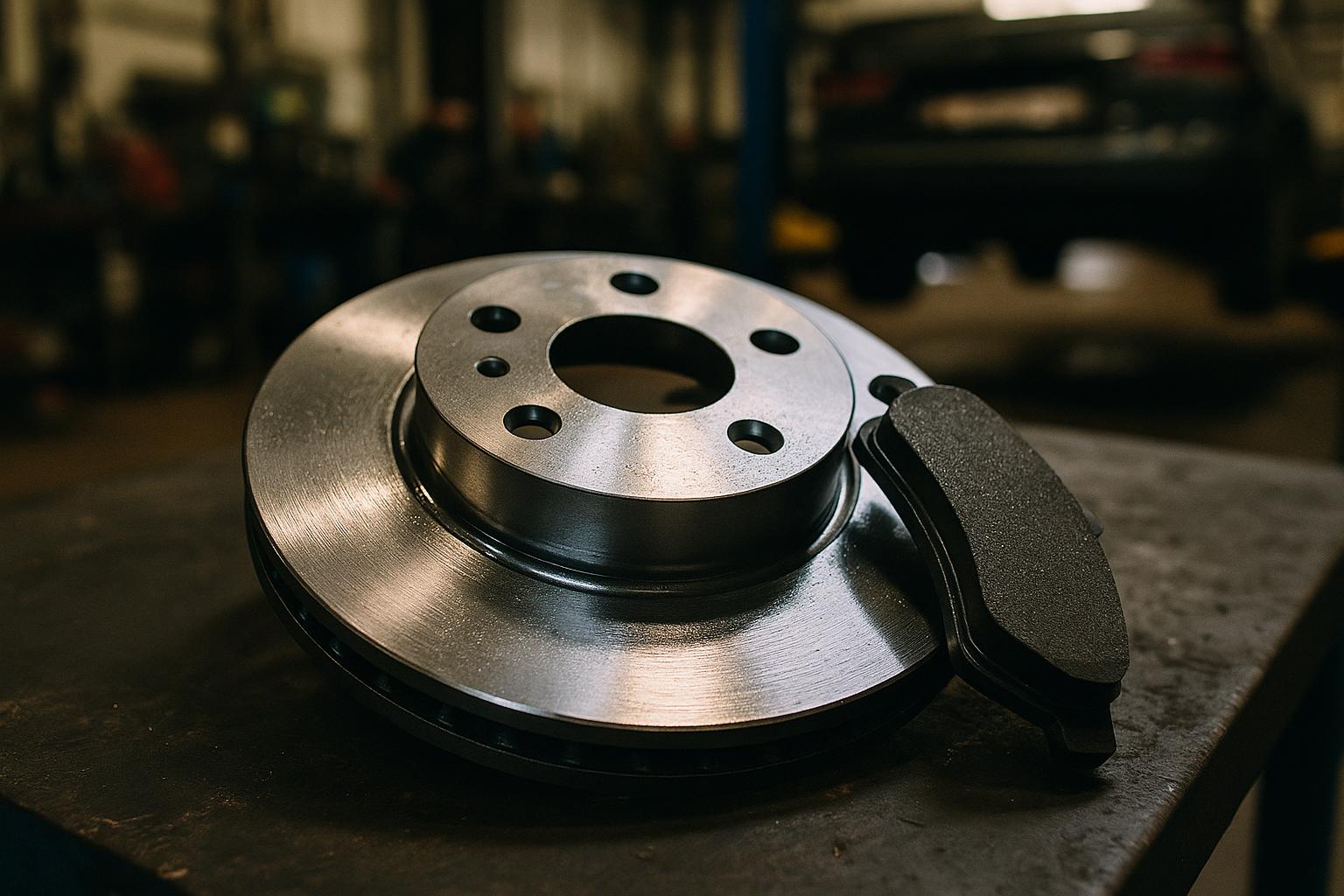
Brakes wear out slowly, so the change is easy to miss until something goes wrong. Most cars give you fair warning first: a noise, a feel through the pedal, a light on the dash. Catch it early and you usually need pads only. Leave it and you can end up replacing discs too, which costs more and means a longer job. Here are seven signs it is time to get your brakes looked at, what each one usually means, and when to book in.
Why brakes wear, and pads versus discs
Every time you brake, the pads clamp onto the discs and friction slows the car. That friction wears the pad material down over time. Pads are the parts designed to wear, so they get replaced regularly. Discs last longer, but they are not forever. They thin out, can warp from heat, and get scored if you run pads down to the metal backing.
The order matters. Pads are the cheaper, faster part to swap. If you act on the early warning signs, a pad change is often all you need. If you ignore a grinding noise for weeks, the worn pad cuts grooves into the disc, and then you are paying for pads and discs together. That is the main reason we tell people not to sit on brake noise.
The 7 warning signs
1. Squealing or screeching when you brake
A high-pitched squeal when you press the pedal is usually the first sign. Many pads have a small metal wear indicator built in that touches the disc once the pad gets thin, on purpose, so it squeals to tell you. A light squeal first thing on a damp morning that clears after a few stops is normal. A squeal that happens every time you brake means the pads are getting low and want checking.
2. Grinding or a harsh metal sound
Grinding is more serious than squealing. It usually means the pad material has worn right down and metal is now pressing on metal. At this point the pad backing plate is scoring the disc every time you brake. Keep driving and you turn a pad job into a pad and disc job, and stopping power drops while it gets worse. If you hear grinding, stop using the car for normal trips and get it seen quickly.
3. Vibration or judder through the pedal
If the brake pedal pulses or shakes under your foot, especially braking from higher speed, the discs may be warped or unevenly worn. Heat is the usual cause, often from heavy or repeated braking. Warped discs rarely fix themselves and tend to get worse, so it is worth having them measured.
4. A soft or spongy pedal
The pedal should feel firm. If it sinks further than usual, feels soft, or you have to pump it to get a solid bite, that points to a problem in the hydraulic side: air in the lines, a fluid leak, or tired brake fluid. This is one to take seriously because it affects how reliably the car stops. Get it checked rather than guessing.
5. Longer stopping distances
If the car takes noticeably longer to pull up than it used to, or you find yourself pressing harder for the same result, the braking system is not working as it should. Worn pads, thin discs, or a fluid issue can all cause it. Stopping distance is the one that matters most for safety, so do not wait on this one.
6. The car pulls to one side when braking
If the car drifts left or right under braking, the brakes are probably working harder on one side than the other. That can be a sticking caliper, uneven pad wear, or a fault on one corner. Besides being annoying, it makes the car harder to control in an emergency stop. It needs looking at across both sides, not just the one that feels off.
7. Brake warning light or a burning smell
A brake warning light on the dash can mean low fluid, worn pads (on cars with pad sensors), or a fault in the system. Do not ignore it. A sharp burning or chemical smell after braking, sometimes with a faint whiff of smoke, can mean overheated brakes or a caliper that is not releasing. If you smell burning, pull over safely, let the brakes cool, and get them checked before driving far.
When to get your brakes checked
The short version: if you notice any of the signs above, book a check rather than waiting for the next one. Squealing means soon. Grinding, a soft pedal, pulling, or longer stopping distances mean now. A quick inspection tells you whether you need pads only or pads and discs, and you get a clear price before any work starts.
It is also worth having brakes checked as part of regular upkeep. A proper car service includes a look at the pads, discs and fluid, so problems get spotted before they turn into noises. If you want to know what a service covers, our guide to what a car service includes runs through it. Brakes are also a common MOT failure point, so it pays to sort them before the test rather than after.
The cheapest brake job is the one you book when you first hear the squeal. Pads only, no scored discs, no surprises.
Same-day brake replacement in Tottenham Hale
We handle brake replacement at our garage in Tottenham Hale, North London, and most standard pad and disc jobs are done the same day. We work on cars and vans of all makes, with bodywork and mechanical under one roof, so you only deal with one place. If your test is coming up, see our guide on how to pass your MOT first time. We cover drivers right across the area too, listed on our areas we cover page.
For a free, no-obligation quote, call us on 020 3582 3444 or message us on WhatsApp. We are open every day from 08:00 to 22:00, so you can get a check booked around your week.
Good to know
Can I just replace the brake pads and not the discs?+
Often yes, if you catch the wear early. Pads are the parts designed to wear and are cheaper and quicker to swap. Discs only need replacing when they are worn thin, warped, or scored, usually from running pads down too far. A quick check tells you which you need before any work starts.
Is it safe to drive with grinding brakes?+
No, not for normal trips. Grinding usually means the pad has worn down to metal and is scoring the disc, so stopping power drops and damage gets worse the longer you drive. Get it checked quickly, and try to keep mileage to a minimum until it is sorted.
How long does a brake replacement take?+
Most standard pad and disc jobs are done the same day at our garage in Tottenham Hale. We give you a clear price first, then fit the parts, so you are usually back on the road that day.
How much does it cost to replace brakes?+
It depends on your car and whether you need pads only or pads and discs. We give a free, no-obligation quote after a quick check, so you know the price before any work happens. Call 020 3582 3444 or message us on WhatsApp.
Get a free, no-obligation quote
Bodywork and mechanical under one roof in Tottenham Hale. Open every day, 08:00 to 22:00. Call, message on WhatsApp, or request a quote.