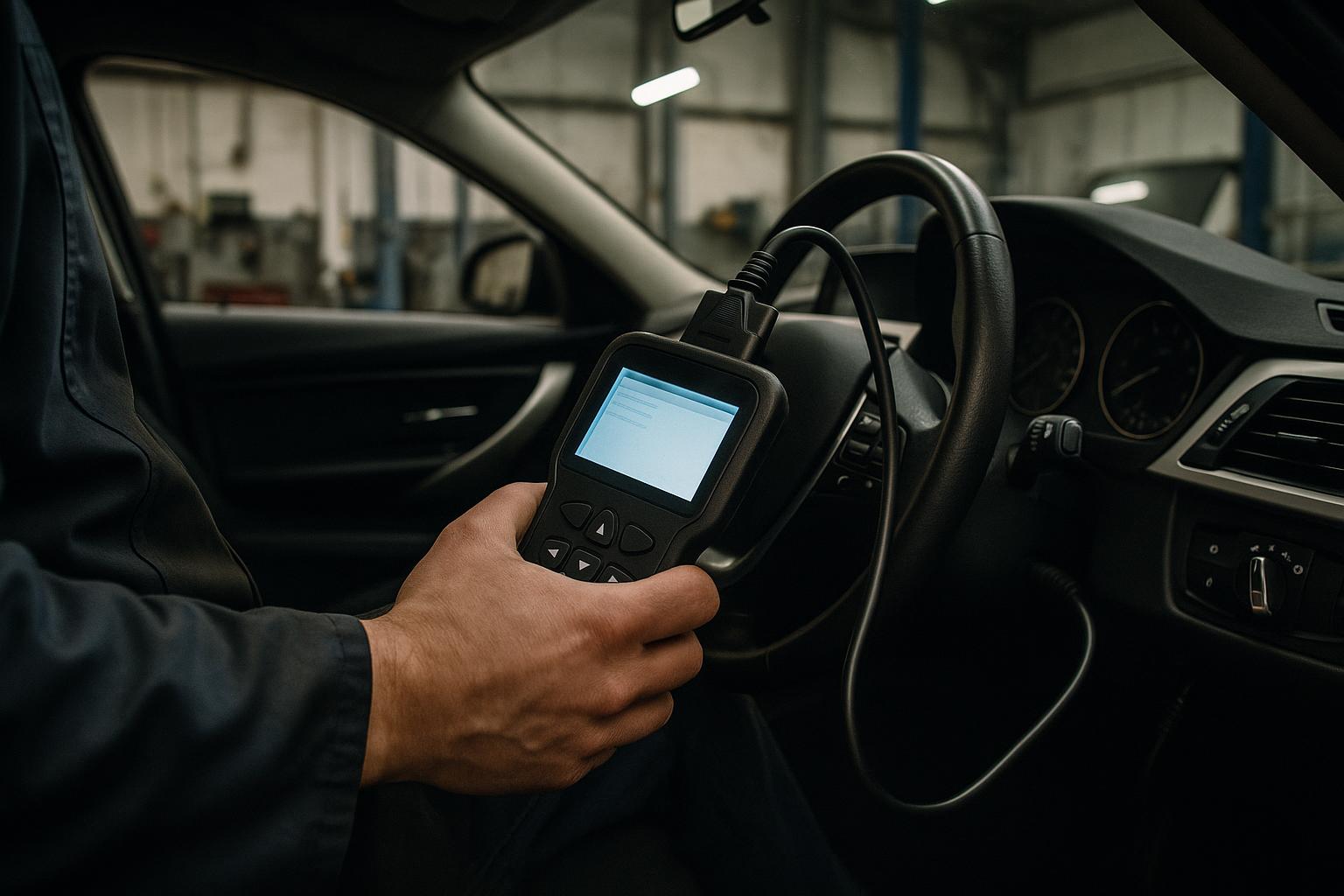
A light appears on the dashboard and the first question is always the same: can I keep driving, or do I need to stop now? The honest answer depends on which light, what colour it is, and how it behaves. This guide explains the colour code, walks through the common warning lights one by one, and tells you how urgent each one usually is. If a light has you worried, we run car diagnostics every day at our Tottenham Hale workshop and explain the results in plain English.
Start with the colour
Modern dashboards use a traffic-light system. The colour tells you how serious the warning is before you even work out which symbol it is.
- Red means stop or act now. A red light points to something that can cause damage or leave you unsafe, such as low oil pressure, overheating, or a brake fault. Pull over somewhere safe as soon as you can and switch off.
- Amber or orange means get it checked soon. The car can usually still be driven, but a fault has been logged and it will not fix itself. Book it in rather than ignoring it.
- Green or blue is information only. These confirm something is on or working, like your headlights, indicators, or cruise control. No action needed.
One extra rule worth knowing: a light that flashes is more urgent than the same light showing steady. A flashing engine light, for example, is a stronger warning than a steady one.
Red lights: stop or act now
Oil pressure
Usually an oil-can symbol. If this comes on while driving, the engine may not be getting enough oil pressure, and running it like that can wreck the engine in minutes. Stop as soon as it is safe, switch off, and check the oil level once the engine has cooled. Do not keep driving to see if it goes away. This is one to get looked at before you go any further, and it often leads into engine repairs if there is a deeper fault.
Coolant temperature
Often a thermometer in waves, and sometimes red when the engine is overheating. If the gauge climbs or the light turns red, pull over and let the engine cool before you do anything else. Overheating can warp parts and cause expensive damage. Never open the coolant cap on a hot engine.
Battery and charging
A battery-shaped symbol. It does not always mean a flat battery. More often the charging system is not keeping up, which can point to the alternator or the drive belt. The car may run for a while on what is left in the battery, then stop. Get it checked promptly so you are not stranded.
Brake warning
A red circle with an exclamation mark, or the word BRAKE. First check the handbrake is fully off. If it stays on with the handbrake down, it can mean low brake fluid or a fault in the braking system. Treat anything brake-related as serious. If the pedal also feels soft or the car pulls when stopping, stop driving and call us. You can read more in our guide to signs your brakes need replacing, and we handle brake replacement in-house.
Amber lights: get it checked soon
Engine light (check engine)
The engine outline, sometimes called the check-engine light, is the one drivers see most. It covers a wide range of issues, from a loose fuel cap or a faulty sensor to a misfire or an emissions problem. A steady amber light means drive gently and book it in. A flashing engine light means a misfire that can damage the catalytic converter, so ease off and get it seen quickly. The only way to know what triggered it is a proper diagnostic check.
ABS
The letters ABS in a circle. Your normal brakes still work, but the anti-lock system may not help you in an emergency stop, which matters most on wet or loose surfaces. It is safe to drive carefully to a garage, but do not leave it.
Airbag
A figure with a circle in front, or the letters SRS. This warns that the airbag or seatbelt pretensioner system has a fault, so it may not deploy in a crash. There is nothing you can see or feel day to day, which is exactly why it needs checking. It is a safety system, so book it in.
Tyre pressure (TPMS)
An exclamation mark inside a horseshoe, or the letters TPMS. It means one or more tyres has lost pressure, or a sensor has a fault. Check and adjust your tyre pressures first, as cold weather alone can trip it. If the light stays on after you have set the pressures correctly, a sensor may need attention.
Power steering
A steering wheel symbol, often with an exclamation mark. On many cars the steering will suddenly feel much heavier, especially at low speed when parking. The car is still drivable but harder to control, so reduce speed and get it diagnosed rather than fighting the wheel.
Why a code reader on its own is not enough
Plenty of garages and DIY scanners will read a fault code and hand you the result. The catch is that a code points to an area, not the exact part. A misfire code, for example, tells you which cylinder is misfiring, not whether the cause is a spark plug, a coil, an injector, or something pulling air in where it should not. Replacing parts based on the code alone is how people end up paying for things that were never broken.
A fault code narrows the search. It does not name the part. The physical check is what turns a code into an actual repair.
That is why our diagnostics read the fault codes and then back them up with a physical inspection: checking wiring, connectors, fluids, and the components the code points to. You get an explanation in plain English of what is wrong and what it will take to fix, before any work starts. Some warning lights also overlap with bigger jobs, so it is worth knowing the early timing chain warning signs too.
What to do when a light comes on
- Note the colour. Red means stop or act now; amber means get it checked soon; green or blue is information only.
- If it is red, find a safe place to pull over and switch off, then check the obvious things like oil level, coolant, and the handbrake.
- If it is amber, you can usually drive gently, but book it in rather than hoping it clears.
- If a light is flashing, treat it as more urgent than the same light showing steady.
- Get a proper diagnostic check so the fault is confirmed before any parts are replaced.
We are a body shop and mechanical garage under one roof, serving North London from 59 Garman Rd in Tottenham Hale. Whatever has lit up, we can read it and tell you straight.
Worried about a warning light? Get a free quote
Bring the car in or call us and we will book you a diagnostic check, then explain exactly what is going on. Quotes are free and we are open every day from 08:00 to 22:00. Call 020 3582 3444 or message us on WhatsApp.
Good to know
Can I keep driving with a warning light on?+
It depends on the colour. A red light means stop or act now, so pull over safely and switch off. An amber light usually means you can drive gently but should get it checked soon. Green and blue lights are information only. A flashing light is more urgent than the same light showing steady.
What does the engine warning light mean?+
The engine light covers a wide range of issues, from a loose fuel cap or a faulty sensor to a misfire or an emissions fault. A steady amber light means drive gently and book it in. A flashing engine light means a misfire that can damage the catalytic converter, so ease off and get it checked quickly. A diagnostic check is the only way to know the exact cause.
Why isn't a fault code from a scanner enough to fix the car?+
A code points to an area, not the exact part. A misfire code tells you which cylinder is affected, but not whether the cause is a spark plug, a coil, an injector, or an air leak. We read the codes and then carry out a physical check to confirm the actual fault before replacing anything.
Where can I get a diagnostic check in North London?+
Same Day Car Paint is at 59 Garman Rd, London N17 0UN, in Tottenham Hale. We run car diagnostics on all makes of car and van, every day from 08:00 to 22:00, with free quotes. Call 020 3582 3444 or message us on WhatsApp.
Get a free, no-obligation quote
Bodywork and mechanical under one roof in Tottenham Hale. Open every day, 08:00 to 22:00. Call, message on WhatsApp, or request a quote.